〈謀攻〉第 1 課
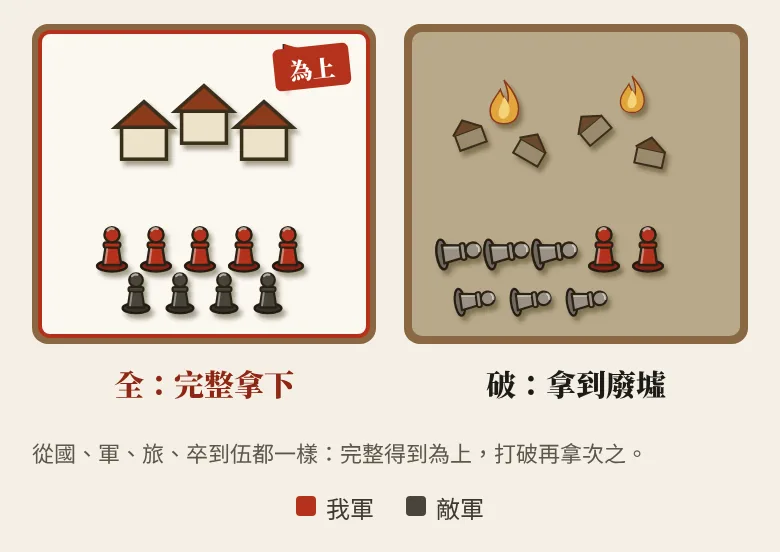
完整取得勝過打爛再拿。
原孫子曰:凡用兵之法,全國為上,破國次之;全軍為上,破軍次之;全旅為上,破旅次之;全卒為上,破卒次之;全伍為上,破伍次之。〈謀攻〉
原意
讓敵國、敵軍完整降服是上策,打破它是次策;從軍、旅、卒到伍,每一層都一樣。
延伸:用在今天
收購一家公司,保住它的人才和客戶,比把它打垮更有價值。
關鍵詞
- 全 quán winning whole
In English
Taking something whole beats breaking it to win it.
Bringing an enemy state or army to submit intact is best; breaking it is second best, and the same holds for every unit, from army and regiment down to the smallest squad (winning whole).
Applied today: When you acquire a company, keeping its people and customers is worth more than crushing it.
Original translation (Lionel Giles, 1910): Sun Tzǔ said: In the practical art of war, the best thing of all is to take the enemy’s country whole and intact; to shatter and destroy it is not so good. So, too, it is better to capture an army entire than to destroy it, to capture a regiment, a detachment or a company entire than to destroy them. Hence to fight and conquer in all your battles is not supreme excellence; supreme excellence consists in breaking the enemy’s resistance without fighting.