〈謀攻〉第 6 課
依雙方實力對比決定打法,打不過就避開。
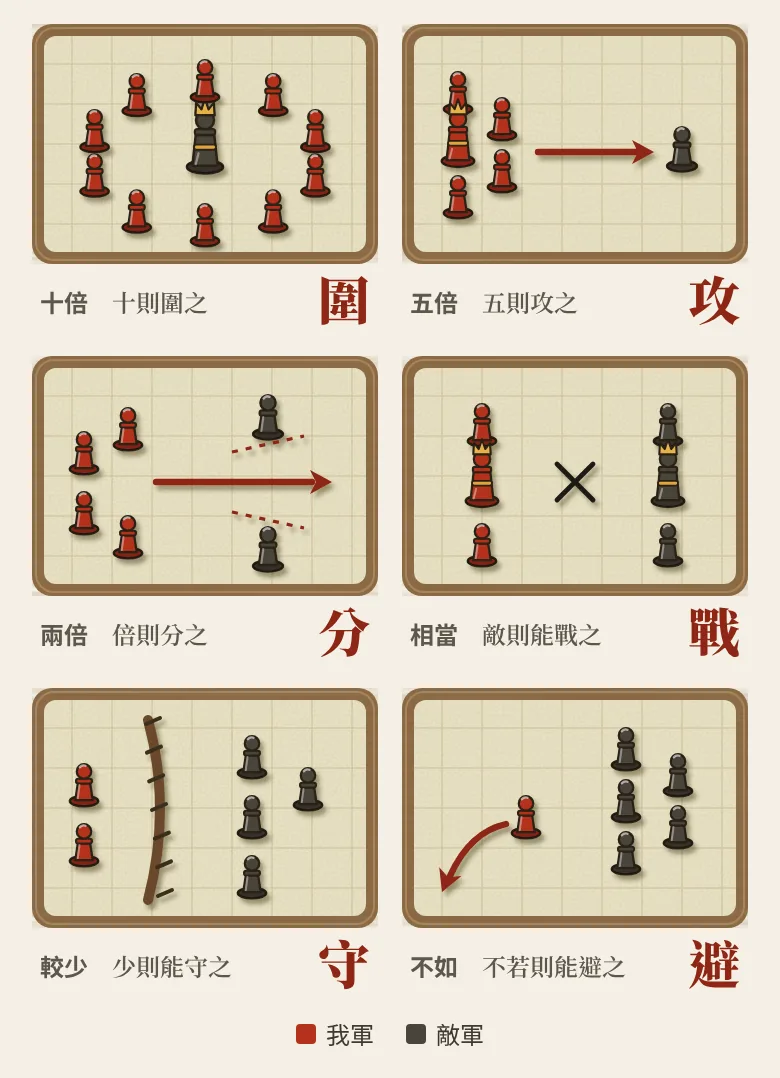
原故用兵之法,十則圍之,五則攻之,倍則分之,敵則能戰之,少則能守之,不若則能避之。〈謀攻〉
原故小敵之堅,大敵之擒也。〈謀攻〉
原意
兵力十倍就包圍,五倍就進攻,兩倍就分割敵人,相當就要能戰,較少就要能守,不如對方就要能避;弱小的一方硬撐,只會被強大的一方擒獲。
延伸:用在今天
資源少的團隊不要和大公司正面對決,要找縫隙或先守住。
In English
Choose your tactic by the balance of strength, and avoid fights you can't win.
With ten times the enemy's strength, surround him; with five times, attack; with twice, divide him; when evenly matched, be able to fight; when weaker, be able to defend; when outmatched, be able to avoid him. A small force that stubbornly holds on will only be captured by a larger one.
Applied today: A team with fewer resources shouldn't take on a large company head-on; look for gaps, or hold your ground first.
Original translation (Lionel Giles, 1910): It is the rule in war, if our forces are ten to the enemy’s one, to surround him; if five to one, to attack him; if twice as numerous, to divide our army into two. If equally matched, we can offer battle; if slightly inferior in numbers, we can avoid the enemy; if quite unequal in every way, we can flee from him.