〈軍形〉第 9 課
用數據一步步推算實力,差距大到壓倒性時才出手。
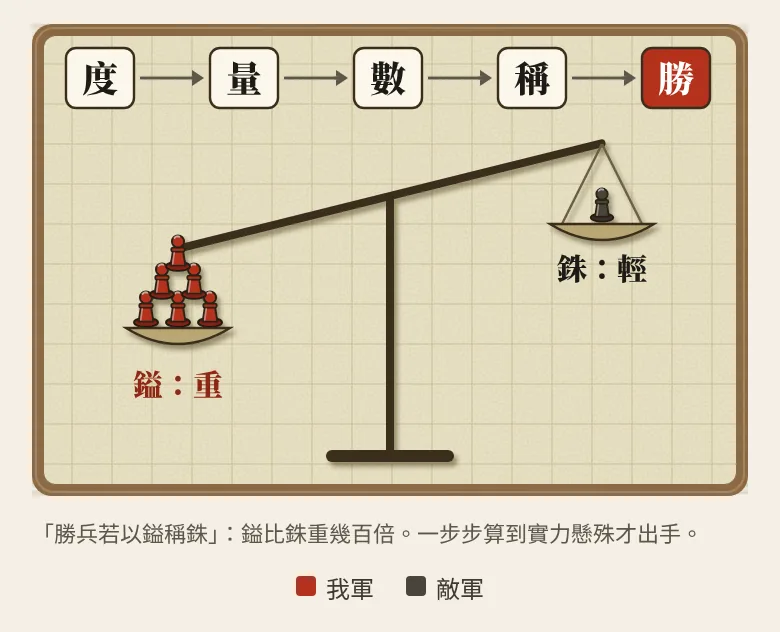
原兵法:一曰度,二曰量,三曰數,四曰稱,五曰勝。〈軍形〉
原地生度,度生量,量生數,數生稱,稱生勝。〈軍形〉
原故勝兵若以鎰稱銖,敗兵若以銖稱鎰。〈軍形〉
原意
兵法有五個步驟:度(土地)、量(物產)、數(兵員)、稱(力量對比)、勝(勝負);一層推出下一層。勝利的軍隊就像用「鎰」去秤「銖」,力量懸殊。
延伸:用在今天
決策前從市場規模、資源到人力層層估算,確保實力明顯佔優。
關鍵詞
- 度量數稱勝 dù liàng shù chèng shèng the five measures
In English
Measure strength step by step, and move only when the gap is overwhelming.
Military method has five steps, each built on the one before: measuring the land, estimating its resources, counting the troops, weighing the balance of strength, and so reaching victory. A victorious army is like a heavy weight set against a feather on the scale.
Applied today: Before a big decision, estimate layer by layer, from market size to resources to people, and move only when your advantage is clear.
Original translation (Lionel Giles, 1910): In respect of military method, we have, firstly, Measurement; secondly, Estimation of quantity; thirdly, Calculation; fourthly, Balancing of chances; fifthly, Victory.