〈虛實〉第 9 課
什麼都想防,就處處都薄弱。
原吾所與戰之地不可知,不可知,則敵所備者多,敵所備者多,則吾之所與戰者寡矣。〈虛實〉
原故備前則後寡,備後則前寡,備左則右寡,備右則左寡,無所不備,則無所不寡。〈虛實〉
原寡者,備人者也;衆者,使人備己者也。〈虛實〉
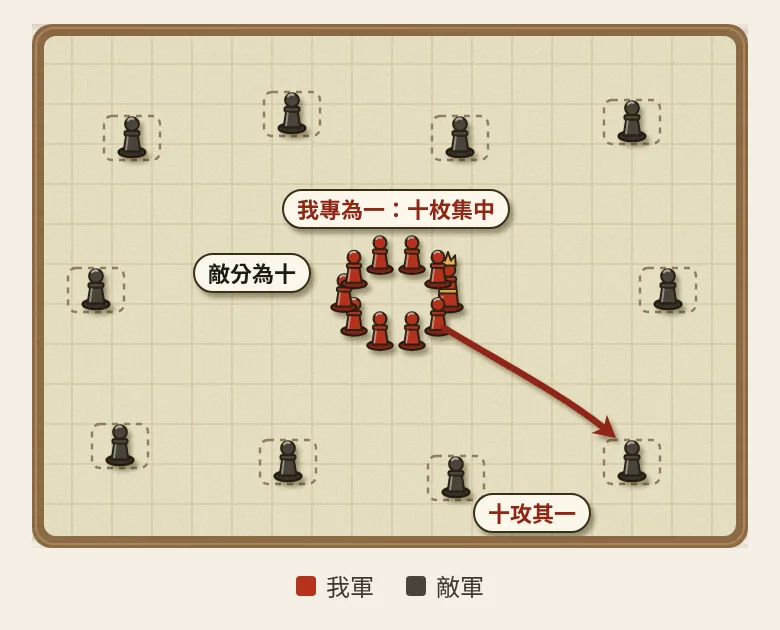
原意
敵人不知道我要在哪裡交戰,就要多處防備,防備的地方越多,每處兵力越少;防前則後少、防左則右少,處處防備就處處薄弱。兵力少是因為處處防人,兵力多是因為讓別人防我。
延伸:用在今天
策略就是選擇不做什麼,資源不能平均分配。
In English
Try to defend everything and you are weak everywhere.
If the enemy does not know where I will fight, he must prepare in many places, and the more places he defends the fewer troops he has at each; strengthen the front and the rear is thin, strengthen the left and the right is thin, defend everywhere and you are weak everywhere.
Applied today: Strategy means choosing what not to do; resources cannot be spread evenly.
Original translation (Lionel Giles, 1910): The spot where we intend to fight must not be made known; for then the enemy will have to prepare against a possible attack at several different points; and his forces being thus distributed in many directions, the numbers we shall have to face at any given point will be proportionately few.