〈虛實〉第 14 課
像水一樣避開堅實、流向空虛,隨對手變化而取勝。
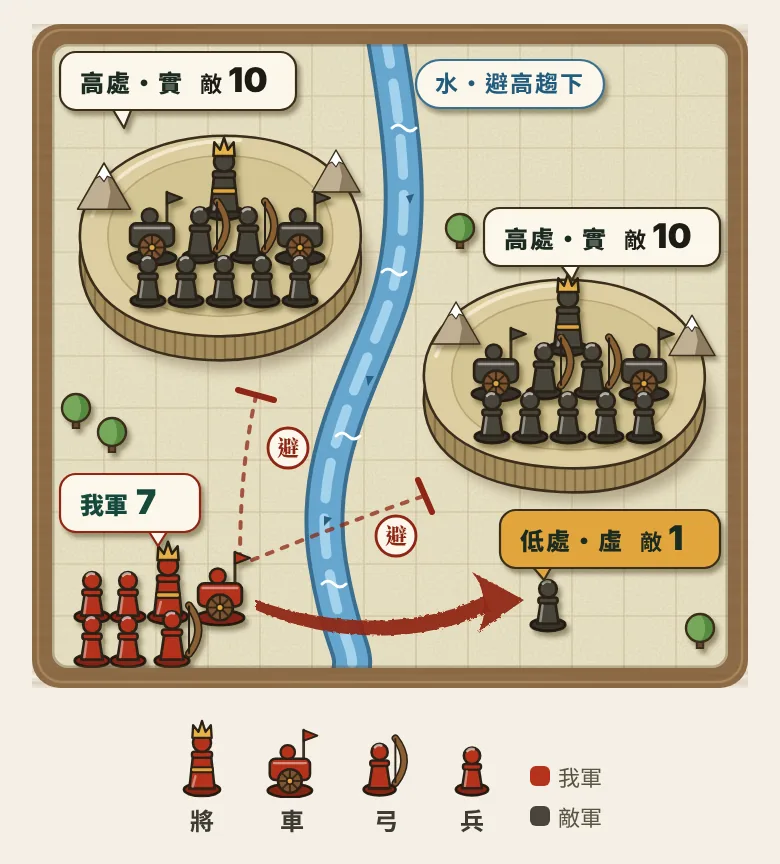
原夫兵形象水,水之行,避高而趨下;兵之勝,避實而擊虛。〈虛實〉
原水因地而制行,兵因敵而制勝。〈虛實〉
原故兵無成勢,無恒形,能因敵變化而取勝者,謂之神。〈虛實〉
原意
用兵像水,水避開高處流向低處,用兵避開堅實打擊空虛;水依地形決定流向,用兵依敵情決定勝法。兵無固定的態勢,水無固定的形狀,能隨敵變化而取勝,叫做神。
延伸:用在今天
策略要隨市場與對手調整,不要死守一套打法。
關鍵詞
- 虛實 xū shí gaps and strengths (xu and shi)
In English
Like water, avoid the solid, flow into the empty, and shape your win to the opponent.
An army is like water: water avoids high ground and flows to low ground, and an army avoids the enemy's strengths and strikes his gaps (gaps and strengths). Water takes its course from the ground, and an army takes its way to victory from the enemy. An army has no fixed form, as water has no fixed shape, and one who wins by changing with the enemy is called divine.
Applied today: Adjust your strategy to the market and your rivals instead of clinging to one playbook.
Original translation (Lionel Giles, 1910): Military tactics are like unto water; for water in its natural course runs away from high places and hastens downwards. So in war, the way is to avoid what is strong and to strike at what is weak.