〈軍爭〉第 2 課
繞遠路反而可能更快到,把不利變成有利。
原軍爭之難者,以迂為直,以患為利。〈軍爭〉
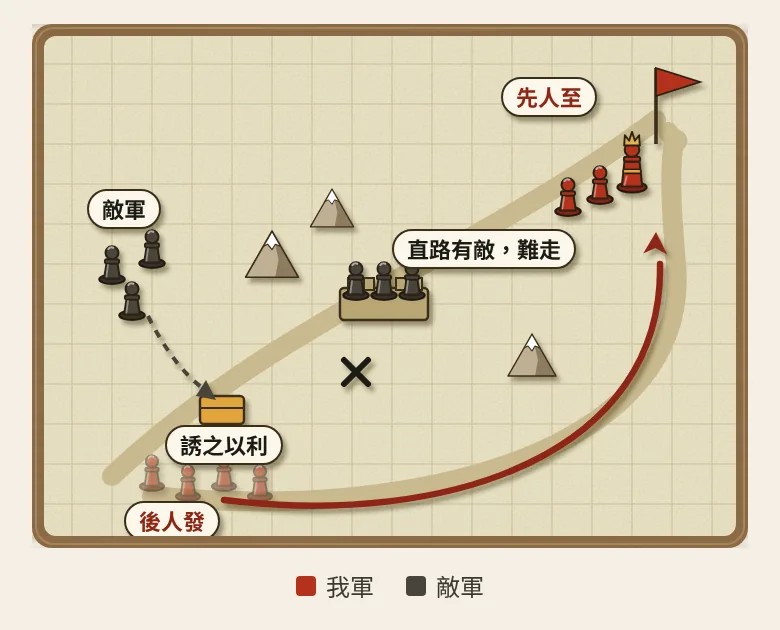
原故迂其途,而誘之以利,後人發,先人至,此知迂直之計者也。〈軍爭〉
原意
軍爭的難處,在於把迂迴變成直路,把禍患變成利益;故意繞遠並用小利引誘敵人,比敵人晚出發卻先到達,這就是懂得迂直之計。
延伸:用在今天
看似繞路的策略,例如先做小眾市場,可能是最快到達主流的方法。
關鍵詞
- 以迂為直 yǐ yū wéi zhí the long way round as the shortcut
In English
The roundabout route can be the fastest; turn a disadvantage into an advantage.
The difficulty of maneuvering is turning the roundabout into the direct and trouble into gain: take the long way round, draw the enemy off with a small lure, set out after him and still arrive first; this is knowing the long way round as the shortcut.
Applied today: A strategy that looks like a detour, such as starting with a niche market, can be the fastest path to the mainstream.
Original translation (Lionel Giles, 1910): After that, comes tactical manoeuvring, than which there is nothing more difficult. The difficulty of tactical manoeuvring consists in turning the devious into the direct, and misfortune into gain.