〈九變〉第 7 課
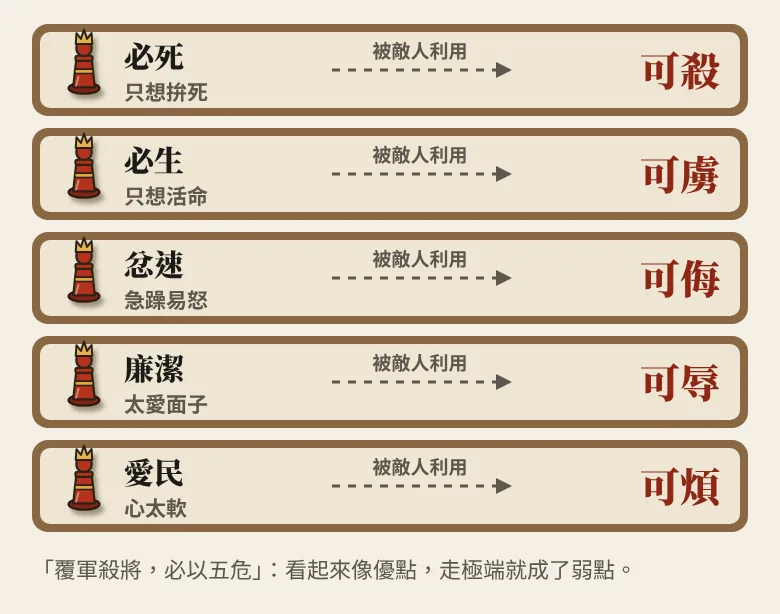
領導者有五種致命弱點:魯莽、怕死、易怒、愛面子、心太軟。
原故將有五危︰必死,可殺也﹔必生,可虜也﹔忿速,可侮也﹔廉潔,可辱也﹔愛民,可煩也。〈九變〉
原凡此五者,將之過也,用兵之災也。〈九變〉
原覆軍殺將,必以五危,不可不察也。〈九變〉
原意
將領有五種危險:只知死拼可能被殺,貪生怕死可能被俘,急躁易怒可能被激怒,過於愛惜名節可能被羞辱,過於愛民可能被煩擾。這五者是將領的過錯、用兵的災難,軍隊覆滅、將領被殺都源於此,不能不重視。
延伸:用在今天
領導者的個性弱點會被對手利用,要有自覺。
關鍵詞
- 將有五危 jiàng yǒu wǔ wēi the five fatal flaws of a leader
案例 · 定軍山:夏侯淵恃勇陣亡
曹操曾告誡夏侯淵,為將要懂得怯弱的時候,不能只靠勇猛。定軍山之戰,劉備夜燒圍營,夏侯淵分兵去救另一處,自己帶著較少的兵力,被劉備軍突襲而陣亡。正是孫子說的「必死,可殺」。
史書有載 · 出自《三國志·魏書·夏侯淵傳》
In English
Five fatal flaws in a leader: recklessness, cowardice, a quick temper, touchy pride, and too soft a heart.
A general has five dangerous flaws: recklessness, which gets him killed; cowardice, which gets him captured; a quick temper, which can be provoked; touchy pride, which can be shamed; and too much tenderness for his people, which can be exploited to wear him down. These ruin armies and kill generals and must be taken seriously (the five fatal flaws of a leader).
Applied today: Rivals will exploit a leader's personal weaknesses, so know your own.
Original translation (Lionel Giles, 1910): There are five dangerous faults which may affect a general: Recklessness, which leads to destruction; cowardice, which leads to capture; a hasty temper, which can be provoked by insults; a delicacy of honor which is sensitive to shame; over-solicitude for his men, which exposes him to worry and trouble.