〈行軍〉第 1 課
依山地、河川、沼澤、平地選擇有利位置。
原絕水必遠水,客絕水而來,勿迎之于水內,令半濟而擊之,利;欲戰者,無附于水而迎客,視生處高,無迎水流,此處水上之軍也。〈行軍〉
原孫子曰:凡處軍相敵,絕山依谷,視生處高,戰隆無登,此處山之軍也。〈行軍〉
原絕斥澤,惟亟去無留,若交軍於斥澤之中,必依水草,而背衆樹,此處斥澤之軍也。〈行軍〉
原平陸處易,而右背高,前死後生,此處平陸之軍也。〈行軍〉
原凡此四軍之利,黃帝之所以勝四帝也。〈行軍〉
原意
山地行軍要靠近山谷、佔據高處;渡河後要遠離河岸,敵人渡河時等他渡到一半再打;鹽鹼沼澤要盡快通過;平原要佔平坦處並背靠高地。黃帝就是靠這四種駐軍方法戰勝四方部族。
延伸:用在今天
進入不同環境前,先想清楚哪個位置最有利、最不利。
關鍵詞
- 半濟而擊 bàn jì ér jī striking mid-crossing
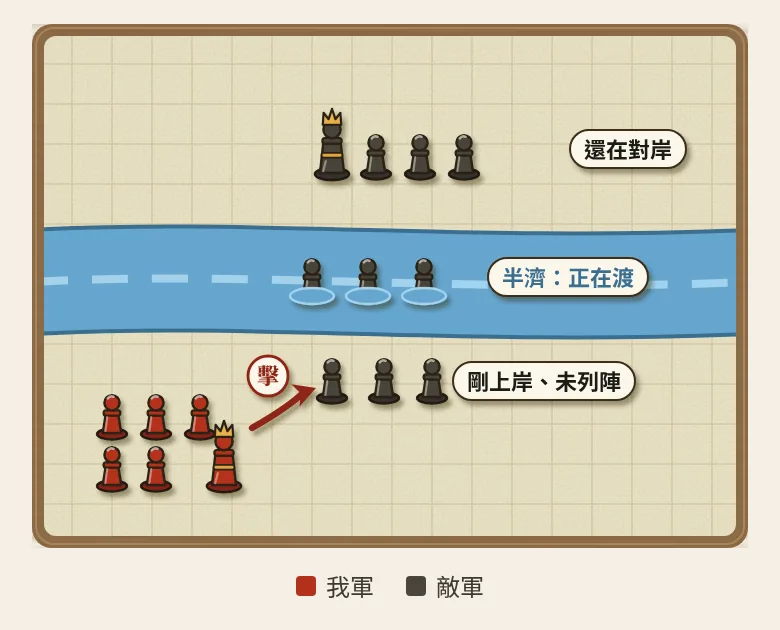
案例 · 泓水之戰:宋襄公不擊半渡之敵
宋楚兩軍在泓水交戰,楚軍渡河到一半時,宋國大臣建議出擊,宋襄公說君子不趁人之危;楚軍上岸還沒列陣,宋襄公又拒絕進攻,結果宋軍大敗,宋襄公也受傷。正好是「半濟而擊」的反面教材。
史書有載 · 出自《左傳·僖公二十二年》
In English
Pick your position according to the ground: mountains, rivers, marshes or plains.
In mountains, keep near the valleys and hold the heights; after crossing a river, move away from its banks, and strike an enemy crossing toward you when half his force is over (striking mid-crossing); cross salt marshes quickly; on the plain, take level ground with high ground behind you. The Yellow Emperor defeated the four surrounding peoples with these four ways of positioning.
Applied today: Before entering a new environment, think through which positions are most and least favorable.
Original translation (Lionel Giles, 1910): After crossing a river, you should get far away from it. When an invading force crosses a river in its onward march, do not advance to meet it in midstream. It will be best to let half the army get across, and then deliver your attack. If you are anxious to fight, you should not go to meet the invader near a river which he has to cross. Moor your craft higher up than the enemy, and facing the sun. Do not move upstream to meet the enemy. So much for river warfare.