〈地形〉第 1 課
地形分成幾種,每種都有各自的打法。
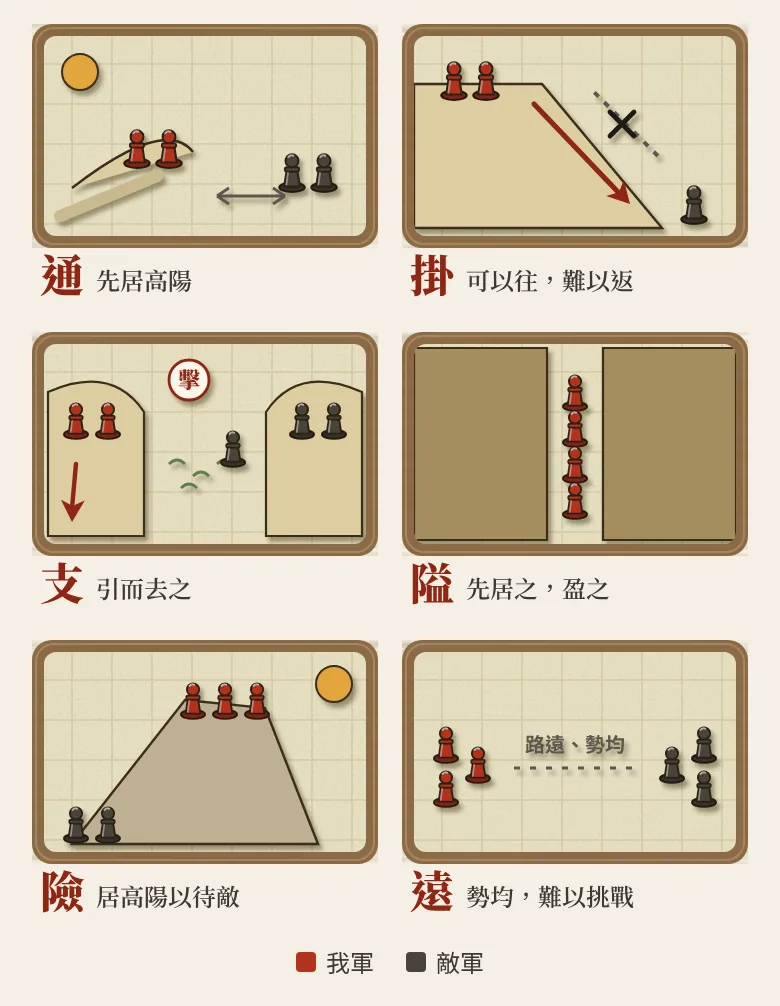
原孫子曰:凡地形有通者、有掛者、有支者、有隘者、有險者、有遠者。〈地形〉
原我可以往,彼可以來,曰通。〈地形〉
原通形者,先居高陽,利糧道,以戰則利。〈地形〉
原可以往,難以返,曰掛。〈地形〉
原掛形者,敵無備,出而勝之;敵若有備,出而不勝,難以返,不利。〈地形〉
原我出而不利,彼出而不利,曰支。〈地形〉
原支形者,敵雖利我,我無出也,引而去之,令敵半出而擊之,利。〈地形〉
原意
地形有通、掛、支、隘、險、遠六種。雙方都能來往的叫「通」,要先佔高處、確保糧道;能去難回的叫「掛」,敵人沒防備才出擊,否則難以撤回;雙方出擊都不利的叫「支」,要假裝撤退,等敵人出來一半再打。
延伸:用在今天
進入不同市場前,先判斷是開放競爭、易進難退,還是誰先動誰吃虧。
關鍵詞
- 六種地形 liù zhǒng dì xíng the six kinds of terrain
In English
Terrain comes in distinct types, and each calls for its own tactics.
There are six kinds of terrain (the six kinds of terrain): accessible, entangling, temporizing, narrow passes, precipitous heights and distant ground. Ground both sides can cross freely is accessible: take the high ground first and secure your supply route. Ground easy to enter but hard to leave is entangling: attack only if the enemy is unprepared, or you may not get back. Ground where neither side gains by moving first is temporizing: feign a withdrawal and strike when half the enemy has come out.
Applied today: Before entering a market, judge whether it is open competition, easy to enter but hard to leave, or a place where whoever moves first loses.
Original translation (Lionel Giles, 1910): Sun Tzǔ said: We may distinguish six kinds of terrain, to wit: (1) Accessible ground; (2) entangling ground; (3) temporizing ground; (4) narrow passes; (5) precipitous heights; (6) positions at a great distance from the enemy.