〈始計〉第 2 課
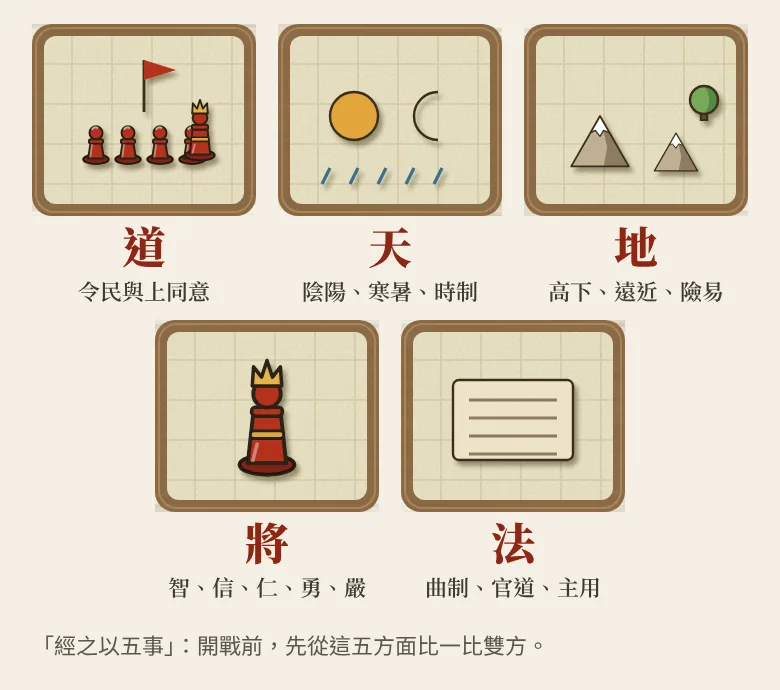
用五個面向評估實力:道、天、地、將、法。
原故經之以五事,校之以計,而索其情:一曰道,二曰天,三曰地,四曰將,五曰法。〈始計〉
原道者,令民與上同意,可與之死,可與之生,而不畏危也。〈始計〉
原天者,陰陽、寒暑、時制也。〈始計〉
原地者,高下、遠近、險易、廣狹、死生也。〈始計〉
原將者,智、信、仁、勇、嚴也。〈始計〉
原法者,曲制、官道、主用也。〈始計〉
原凡此五者,將莫不聞,知之者勝,不知者不勝。〈始計〉
原意
要從五個方面衡量雙方:道是上下同心,天是天候時機,地是地形距離,將是將領素質,法是編制制度與後勤。
延伸:用在今天
評估一家公司或一個團隊,可以看使命共識、時機、市場位置、領導者和制度。
關鍵詞
- 道 dào shared purpose
- 天 tiān timing and conditions
- 地 dì terrain
- 將 jiàng leadership
- 法 fǎ organization and discipline
案例 · 隆中對:出山前先算清天下大勢
劉備三顧茅廬,諸葛亮在出仕前先分析曹操、孫權與荊州、益州的形勢,提出先取荊益、聯吳抗曹的整體方略。正是開戰前先「廟算」、比較雙方實力。
史書有載 · 出自《三國志·蜀書·諸葛亮傳》
In English
Assess strength across five fundamentals: shared purpose, timing, terrain, leadership, and organization.
Measure both sides by five factors: shared purpose (dao), where people and leaders are of one mind; timing and conditions (tian); terrain (di), meaning ground and distance; leadership (jiang), the quality of the commanders; and organization and discipline (fa), meaning structure and supply.
Applied today: To size up a company or a team, look at how far people share its mission, its timing, its position in the market, its leaders and its systems.
Original translation (Lionel Giles, 1910): The art of war, then, is governed by five constant factors, to be taken into account in one’s deliberations, when seeking to determine the conditions obtaining in the field. These are: (1) The Moral Law; (2) Heaven; (3) Earth; (4) The Commander; (5) Method and discipline.