〈謀攻〉第 3 課
先破對方的計畫,其次破它的結盟,再其次才是正面交戰,攻城硬拼最差。
原故上兵伐謀,其次伐交,其次伐兵,其下攻城。〈謀攻〉
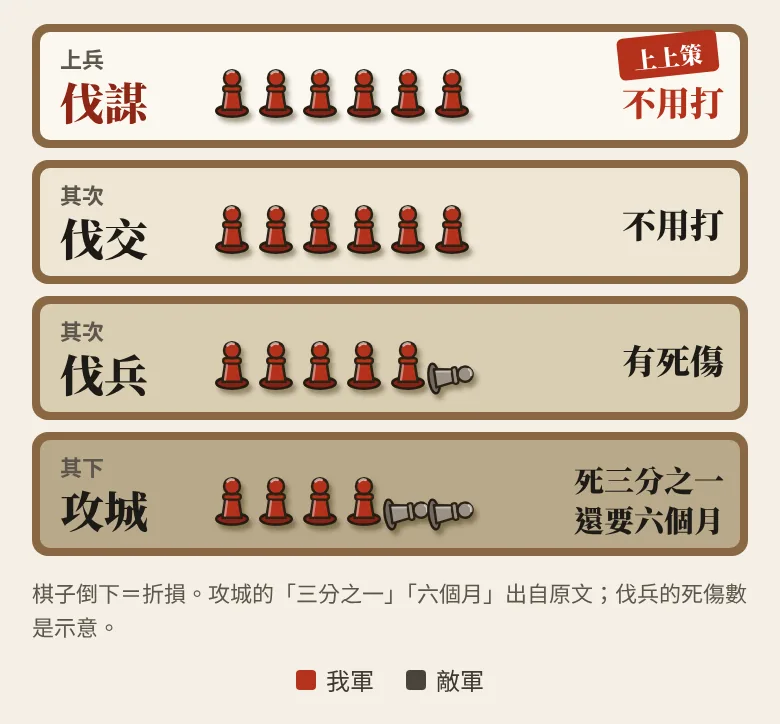
原意
上等用兵是挫敗敵人的謀略,其次是瓦解敵人的外交,再其次是攻打敵軍,最下等是攻城。
延伸:用在今天
競爭時先讓對手的策略失效、拆掉它的合作夥伴,最後才拼價格或硬碰硬。
關鍵詞
- 伐謀 fá móu defeating the plan
In English
First defeat the rival's plans, then its alliances, then its forces; a head-on siege comes last.
The best strategy is to defeat the enemy's plans (defeating the plan), the next is to break up his alliances, the next is to attack his army, and the worst is to besiege walled cities.
Applied today: In competition, first make your rival's strategy ineffective and peel away its partners; compete on price or head-on only as a last resort.
Original translation (Lionel Giles, 1910): Thus the highest form of generalship is to baulk the enemy’s plans; the next best is to prevent the junction of the enemy’s forces; the next in order is to attack the enemy’s army in the field; and the worst policy of all is to besiege walled cities.