〈謀攻〉第 4 課
硬碰硬是不得已的選項,代價高、時間長,還容易失控。
原攻城之法,為不得已。〈謀攻〉
原修櫓轒轀,具器械,三月而後成;距闉,又三月而後已。〈謀攻〉
原將不勝其忿,而蟻附之,殺士三分之一,而城不拔者,此攻之災也。〈謀攻〉
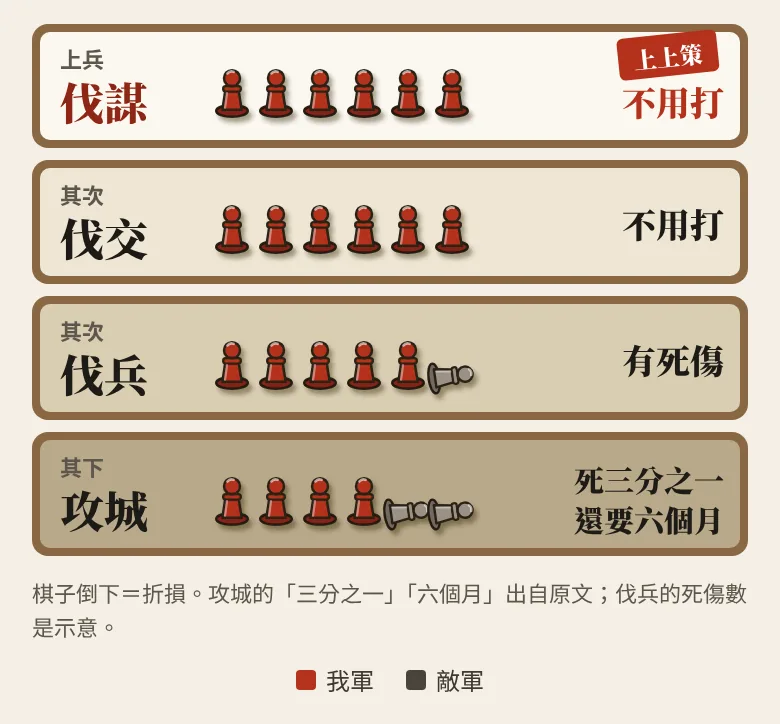
原意
攻城是不得已;光準備器械、堆土山就要六個月,將領忍不住憤怒,讓士兵像螞蟻一樣爬城,死了三分之一還攻不下,這是攻城的災難。
延伸:用在今天
在情緒驅動下投入資源硬拼,往往損失慘重卻沒有結果。
In English
A head-on assault is the last resort: costly, slow, and prone to spiraling out of control.
Besieging cities is a last resort: preparing siege engines and earthworks takes months, and a general who loses his temper sends his men up the walls like ants, losing a third of them without taking the city.
Applied today: Pouring resources into a fight out of frustration usually costs a great deal and achieves nothing.
Original translation (Lionel Giles, 1910): The rule is, not to besiege walled cities if it can possibly be avoided. The preparation of mantlets, movable shelters, and various implements of war, will take up three whole months; and the piling up of mounds over against the walls will take three months more.