〈軍爭〉第 12 課
八條禁忌:不仰攻、不追假敗、不逼絕路。
原故用兵之法,高陵勿向,背丘勿逆,佯北勿從,銳卒勿攻,餌兵勿食,歸師勿遏,圍師必闕,窮寇勿迫,此用兵之法也。〈軍爭〉
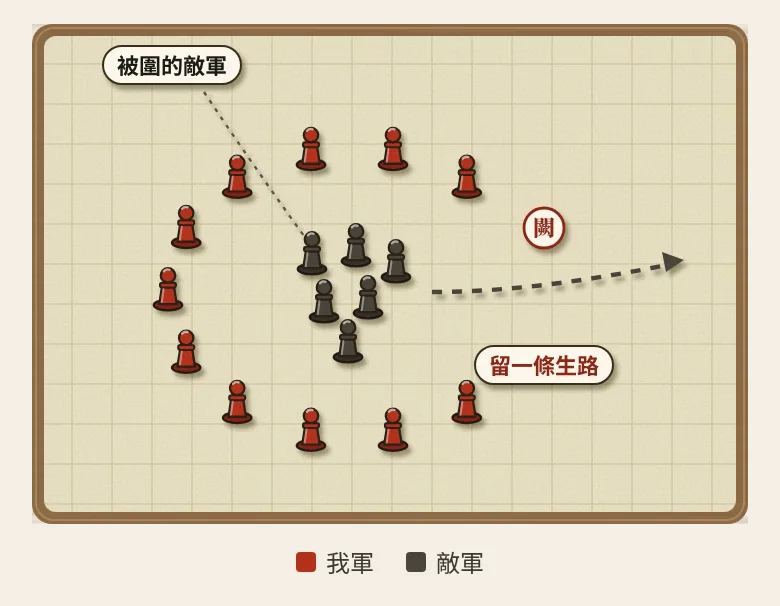
原意
敵佔高地不要仰攻,背靠山丘不要正面迎擊,假裝敗逃不要追,精銳部隊不要攻,誘餌不要吃,撤退回國的部隊不要攔,包圍敵人要留缺口,陷入絕境的敵人不要逼迫。
延伸:用在今天
把對手逼到無路可退,他會拼命反撲;留一條退路,反而更容易收場。
In English
Eight things not to do, from attacking uphill to cornering an enemy with no way out.
Do not attack an enemy holding high ground, do not meet one with a hill at his back, do not chase a feigned retreat, do not attack elite troops, do not take the bait, do not block an army going home, leave a gap when you surround an enemy, and do not press an enemy who has no way out.
Applied today: Corner a rival with no way out and it will fight back desperately; leave it a way out and things are easier to settle.
Original translation (Lionel Giles, 1910): It is a military axiom not to advance uphill against the enemy, nor to oppose him when he comes downhill. Do not pursue an enemy who simulates flight; do not attack soldiers whose temper is keen. Do not swallow bait offered by the enemy. Do not interfere with an army that is returning home. When you surround an army, leave an outlet free. Do not press a desperate foe too hard. Such is the art of warfare.