〈九地〉第 1 課
處境分成九種,先判斷自己在哪一種。
原孫子曰:凡用兵之法,有散地,有輕地,有爭地,有交地,有衢地,有重地,有圮地,有圍地,有死地。〈九地〉
原諸侯自戰其地者,為散地;入人之地而不深者,為輕地;我得則利,彼得亦利者,為爭地;我可以往,彼可以來者,為交地;諸侯之地三屬,先至而得天下之衆者,為衢地;入人之地深,背城邑多者,為重地;山林、險阻、沮澤,凡難行之道者,為圮地;所由入者隘,所從歸者迂,彼寡可以擊吾之衆者,為圍地;疾戰則存,不疾戰則亡者,為死地。〈九地〉
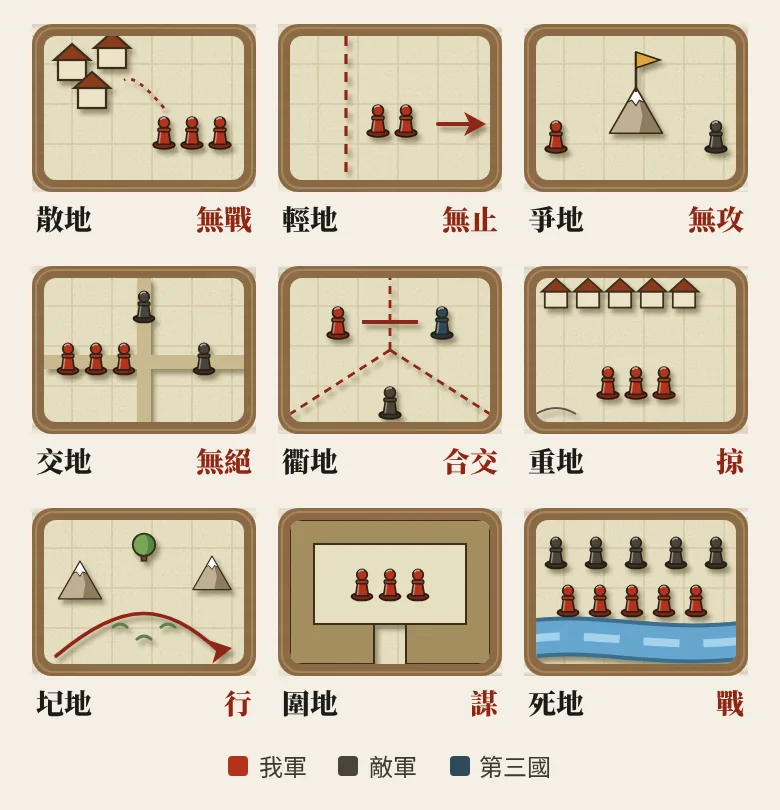
原意
在本國作戰叫散地,進入敵境不深叫輕地,雙方必爭叫爭地,雙方都能往來叫交地,鄰接多國叫衢地,深入敵境叫重地,難行之地叫圮地,入口窄出路遠叫圍地,不快速決戰就會滅亡叫死地。
延伸:用在今天
做決策前,先判斷公司處在主場、初入、必爭或存亡關頭。
關鍵詞
- 九地 jiǔ dì the nine situations
In English
There are nine situations; first know which one you are in.
Fighting in your own territory is dispersive ground; entering enemy land but not deeply is light ground; ground both sides must have is contentious ground; ground both can reach is open ground; ground bordering several states is crossroads ground; deep inside enemy land is serious ground; hard going is difficult ground; a narrow way in and a long way out is hemmed-in ground; and ground where you perish unless you fight at once is desperate ground (the nine situations).
Applied today: Before deciding, work out whether your organization is on home ground, just entering, in a must-win contest or fighting for survival.
Original translation (Lionel Giles, 1910): Sun Tzǔ said: The art of war recognizes nine varieties of ground: (1) Dispersive ground; (2) facile ground; (3) contentious ground; (4) open ground; (5) ground of intersecting highways; (6) serious ground; (7) difficult ground; (8) hemmed-in ground; (9) desperate ground. When a chieftain is fighting in his own territory, it is dispersive ground.