〈九地〉第 2 課
每種處境都有對應的做法。
原是故散地則無戰,輕地則無止,爭地則無攻,交地則無絕,衢地則合交,重地則掠,圮地則行,圍地則謀,死地則戰。〈九地〉
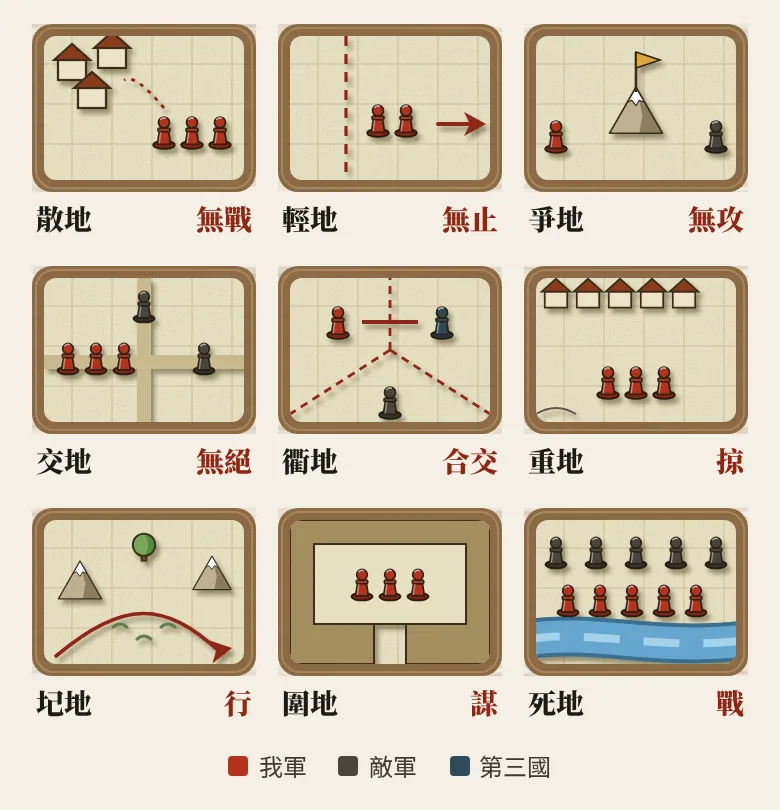
原意
散地不宜作戰,輕地不宜停留,爭地不宜強攻,交地不宜斷了聯繫,衢地要結交諸侯,重地要奪取糧草,圮地要迅速通過,圍地要用計謀,死地要奮勇作戰。
延伸:用在今天
處在不同階段,該打、該守、該結盟、該快速通過,各不相同。
關鍵詞
- 九地 jiǔ dì the nine situations
In English
Each situation has its own right move.
On dispersive ground, do not fight; on light ground, do not stop; on contentious ground, do not attack head-on; on open ground, do not let your lines be cut; at crossroads, form alliances; on serious ground, gather supplies; on difficult ground, keep moving; on hemmed-in ground, use stratagem; on desperate ground, fight (the nine situations).
Applied today: At different stages the right move differs: fight, hold, ally or get through quickly.
Original translation (Lionel Giles, 1910): On dispersive ground, therefore, fight not. On facile ground, halt not. On contentious ground, attack not. On open ground, do not try to block the enemy’s way. On the ground of intersecting highways, join hands with your allies. On serious ground, gather in plunder. In difficult ground, keep steadily on the march. On hemmed-in ground, resort to stratagem. On desperate ground, fight.