〈九地〉第 9 課
團隊要像常山之蛇,打哪裡都能互相支援。
原故善用兵者,譬如率然。〈九地〉
原率然者,常山之蛇也。〈九地〉
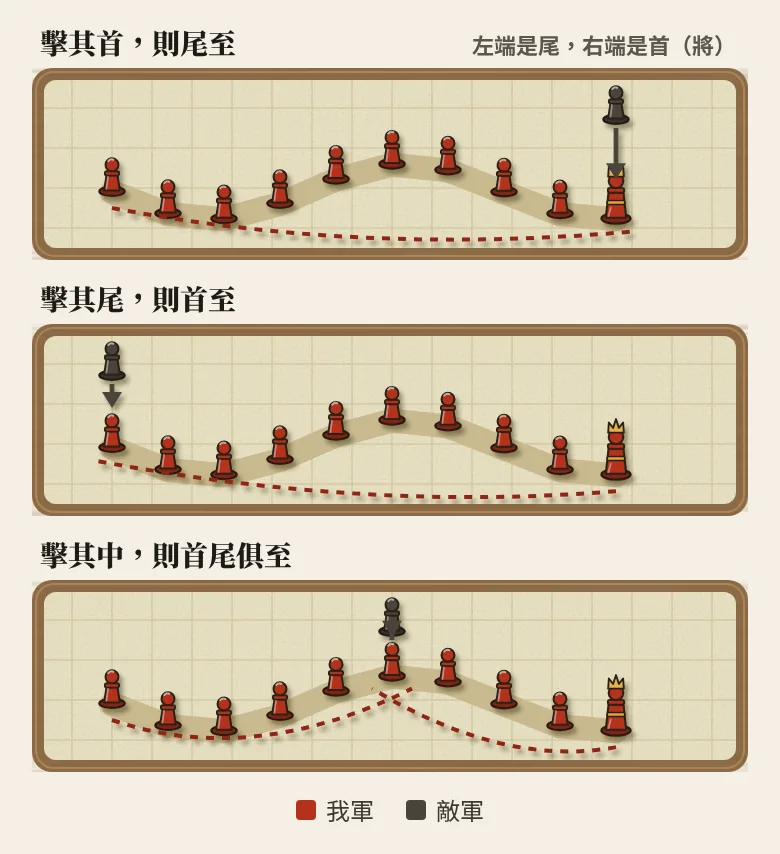
原擊其首則尾至,擊其尾則首至,擊其中則首尾俱至。〈九地〉
原意
善用兵的人像「率然」,率然是常山的一種蛇,打牠的頭尾巴就來救,打牠的尾頭就來救,打牠的中間頭尾都來救。
延伸:用在今天
組織各部門要能互相支援,而不是各自為政。
關鍵詞
- 率然 shuài rán the snake of Mount Chang
In English
A team should be like the snake of Mount Chang: strike any part and the rest comes to help.
A skilled commander is like the shuairan, a snake of Mount Chang (the snake of Mount Chang): strike its head and the tail comes to help; strike its tail and the head comes; strike its middle and both come.
Applied today: Departments should back each other up instead of each working alone.
Original translation (Lionel Giles, 1910): The skilful tactician may be likened to the shuai-jan. Now the shuai-jan is a snake that is found in the Chʽang mountains. Strike at its head, and you will be attacked by its tail; strike at its tail, and you will be attacked by its head; strike at its middle, and you will be attacked by head and tail both.