〈九地〉第 10 課
共同的危機,能讓彼此敵對的人也像左右手一樣合作。
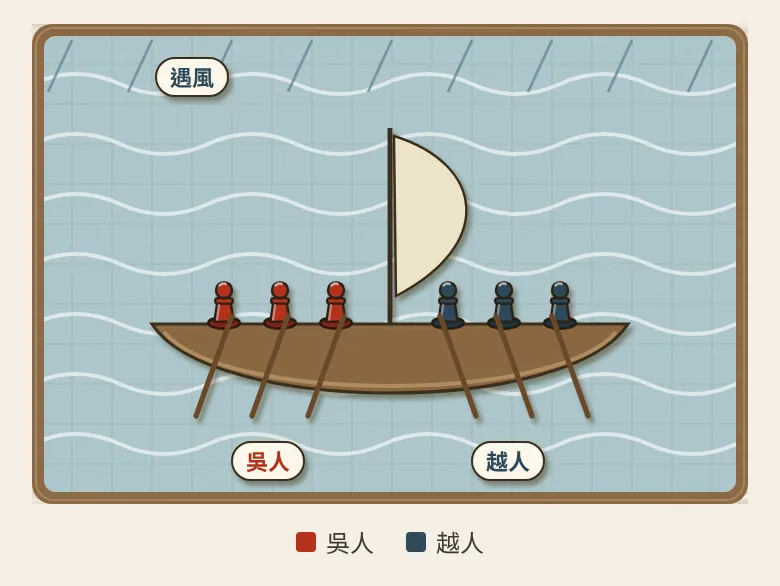
原曰︰「可。夫吳人與越人相惡也,當其同舟而濟。〈九地〉
原敢問︰「兵可使如率然乎?」〈九地〉
原遇風,其相救也,如左右手。」〈九地〉
原意
有人問,軍隊能像率然那樣嗎?答:可以。吳國人和越國人互相仇恨,但同船渡河遇到大風時,他們互相救助就像左右手一樣。
延伸:用在今天
找到共同的威脅或目標,可以讓原本不和的部門或夥伴合作。
In English
A shared crisis can make even enemies help each other like two hands.
Asked whether an army can be made like the shuairan, Sun Tzu says yes: the people of Wu and Yue hate each other, but if they cross a river in the same boat and meet a storm, they help each other like left hand and right.
Applied today: A shared threat or goal can bring departments or partners who don't get along to work together.
Original translation (Lionel Giles, 1910): Asked if an army can be made to imitate the shuai-jan, I should answer, Yes. For the men of Wu and the men of Yüeh are enemies; yet if they are crossing a river in the same boat and are caught by a storm, they will come to each other’s assistance just as the left hand helps the right.